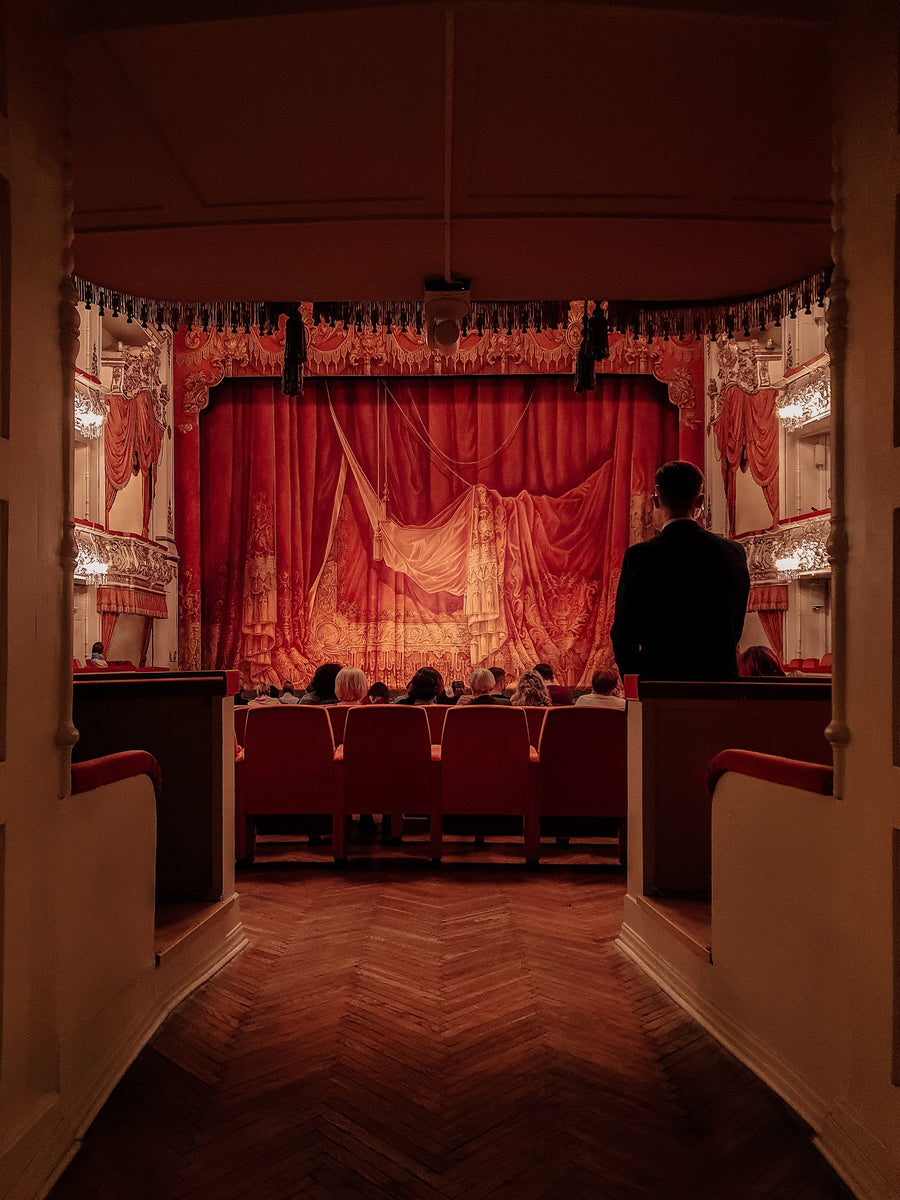
A production owes its first duty neither to the audience, nor to the cast, nor to the mood of the age. It owes it to the story. Let us firmly make that point: always, always, always. If a production does not serve the story, it serves no one.
Consider the stories we keep. There are true loves. There are best friends. There are the things that remain. And then there are the one-night stands, the fair-weather friends, and the things that lack substance. The ones you know for a few years but then in a decade struggle to remember their names. The same can be said of stories.
When a story truly matters, it comes from within its author, arriving with an identity all its own. Almost as though it has forced its way into existence. An unplanned birth. It speaks to those it was fated to reach, who carry the feeling of the first reading with them every time they return. Protecting it is the sacred duty of the author, and of everyone who takes up the work afterward to stage it. They owe that care, too, to the people who loved the story as it was written, and who return to find it still there.
A story may carry a great deal: love, grief, justice, faith, even argument. But it carries what its author placed there. To load it with cargo of our own is to ask the work to say what it never intended and certainly never meant. If one has something to say that does not exist within a story, one must write the play that says it. And not force another man’s story to speak with a false voice. The honest artist has two choices: serve the story, or make a new one.
We, in the audience sit outside the work. We watch it; we are not meant to steer it. Art made by committee has never once been improved by said committee. Every decision in a production, from the largest to the smallest, should answer to a single question: does this serve the story?
It is a demanding standard, but not a narrow one. It welcomes bold staging and inventive design, so long as they serve what the author actually wrote. The test is fidelity, not novelty: does the choice reveal the story on the page, or replace it with another? Interpretation should illuminate the work, not compete with it. The achievement is not to remind an audience how cleverly a play has been staged. It is to make them forget, for a few enchanted hours, that they are sitting in a theatre at all.
The stakes are higher than a single evening. We do not blame the diner who enjoys the salt and grease of junk food. The tragedy is the quiet starvation of an audience that was never served anything fine: people with every capacity for delight who may never know what the theatre can be, because no one ever set a great production before them. Nobody becomes a lifelong lover of the theatre because of a forgettable night. They become one because of the night that made them lose track of time.
So seek that night out. Choose the production that trusts its story, and the company that serves it. The story is master, and the theatre at its best has always known it.