Allhallowtide, sometimes shortened to Hallowtide, was once the lovely word for this time of year, and it has nearly vanished. It is the season of All Hallows, running from October 31 through November 2: All Hallows' Eve, or Hallowe'en; All Saints' Day; and All Souls' Day. The "tide" is the old English word for a season or span of time, the same one that gives us Christmastide, Eastertide, Yuletide, and Whitsuntide. Some church traditions stretch the season longer, but these three days are at its heart. It is a charming word, and we would like it back.
The saints have their feast on November 1, honoring all the saints in heaven, the ones with statues as well as the ones almost no one remembers. On the second, the church turns its attention to the rest, the ordinary faithful who have gone before. The feast of the saints settled on that date by the ninth century, and "All Hallows' Even," "even" being an older word for evening, the night before, eventually shortened to a word we all recognize: Hallowe'en. All Souls' followed at the end of the tenth century, when the abbot of Cluny in France asked his monks to pray for the departed on the day after. The idea spread across Europe and has endured for a thousand years, which is a respectable run for any tradition.
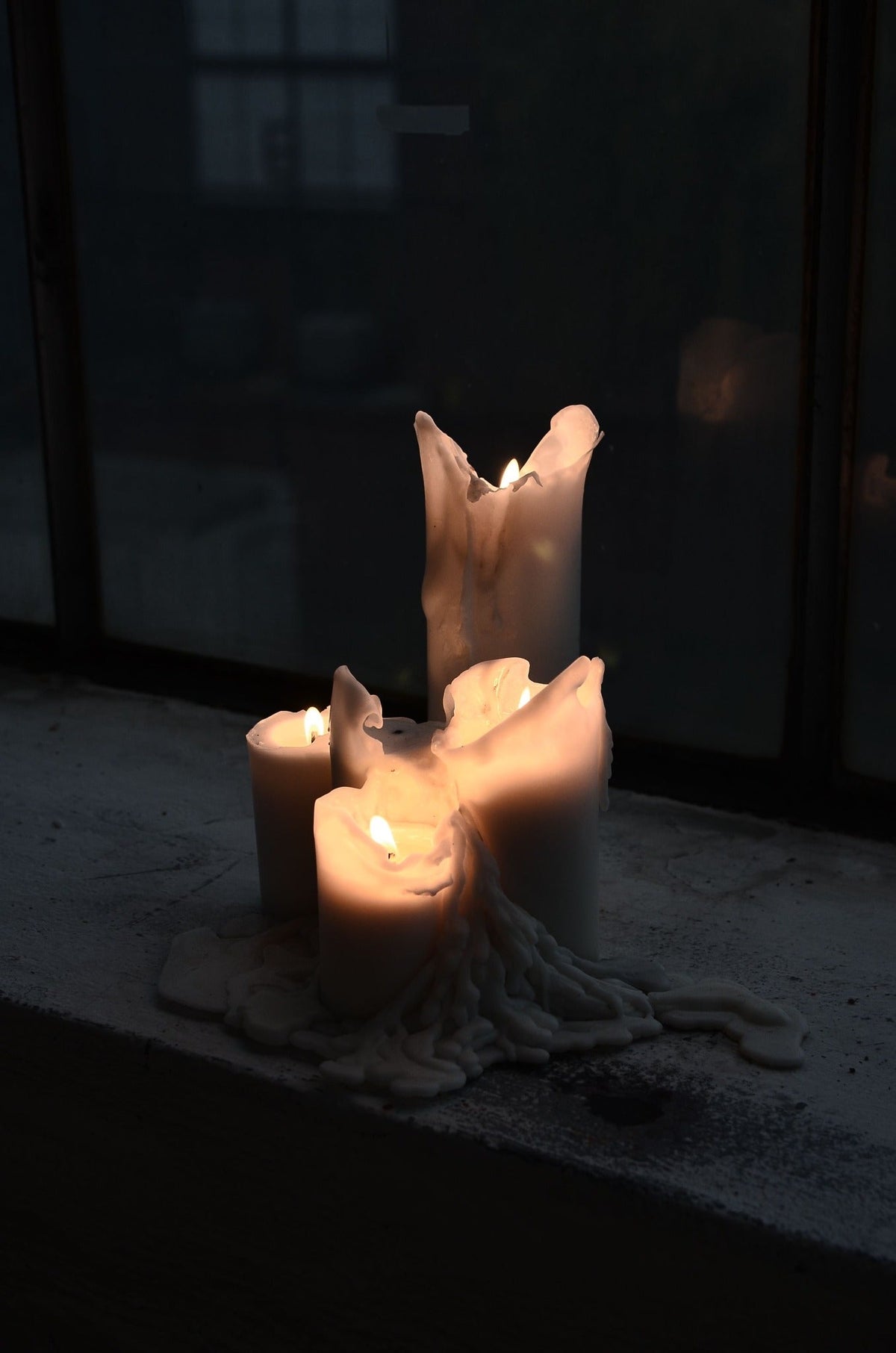
It is also a season thick with folklore. Many trace its older roots to Samhain, the Gaelic festival marking the end of the harvest, when the veil between the living and the dead was said to grow thin. In Irish and Scottish folklore, the fairy folk were said to walk abroad at Samhain, and wise households left out a little food or milk to keep them friendly. The dead, too, were believed to wander home at this season, and households kept a candle burning to guide them, and sometimes a chair by the hearth for them to sit in. In England before the Reformation, church bells were tolled through the night for the souls of the departed, a sound meant to comfort them on their way.
In the English custom of souling, the poor went door to door around All Saints' and All Souls', offering prayers for a household's dead in exchange for a soul cake: a small, round, spiced bun or sometimes something akin to a scone or biscuit, marked with a cross. Each cake eaten was said to speed a soul toward heaven–an awfully big responsibility for a small cake. Souling is thought to be a forebear of trick-or-treating. Elsewhere, the dead are honored with other sweets: in Italy, almond biscuits called fave dei morti, "beans of the dead," and cookies called ossa dei morti, "bones of the dead"; in Spain, marzipan "saints' bones." And in Poland, whole cemeteries glow at dusk with thousands of candles.
The Autumn Flower with Many Roles
In North America, the chrysanthemum is the cheerful flower of the Autumn season with cheerful rust and gold on the front porch, beside the pumpkins, and at the homecoming game. Its name, fittingly, comes from the Greek for "gold flower”, and it is the official birth flower of November, along with the peony, in a month the Catholic calendar sets aside for remembering the dead.
In France and Italy, the chrysanthemum is the flower of the dead and of remembrance. Families fill cemeteries with them for La Toussaint and i morti, and the flower is so closely tied to the occasion that a pot of mums is not the sort of thing one brings to a dinner host. In the East, it stands for long life. In China specifically, it is even steeped into a wine and raised at the autumn Double Ninth Festival to health and longevity. The same bloom, the same weeks of the year, and several entirely different meanings.
It is a flower of contrasts. One side of the ocean sees the last bright thing before winter, and the other sees something we bring to lovingly remember those we have lost. Candles and bright golden flowers to light the night for their dead.
Even the stars seem to agree. Allhallowtide falls in the dark heart of Scorpio season, a sign ruled by Pluto, the lord of the underworld, and tied to the eighth house of endings and transformation. Its highest form is not the scorpion crawling in the dust but the phoenix, rising from its own ashes in a fiery cycle of death and rebirth. It is a month of endings, and of beginnings, and a flower that blooms for both.
So this November, if you choose to remember: a candle lit for someone you miss, a memory shared, a fresh batch of soul cakes, and maybe, just maybe, a chrysanthemum.