This article is for informational purposes only and is not a substitute for professional medical advice. This post may contain affiliate links; Purely Nurtured may earn a small commission if you purchase through them, at no cost to you.
We are only as healthy as what goes into our body. And we don't want that to include PFAS, EDCs, microplastics, and other all-too-common kitchen toxins. Yet most people try to replace their old kitchen products all at once and that's where it's easy to get overwhelmed.
We don't recommend that.
If starting from scratch, here are the first swaps we would make, prioritized.
⸻
Start Here (High-Impact Swaps):
Everything on this list is either something we use or something we would confidently choose for our own kitchen.
→ Non-toxic cookware
Best Option: Heritage Steel 12" Fry Pan With Lid Titanium Series
Trusted Option: All-Clad D3 Stainless Steel 12" Frying Pan With Lid
Easy Option (Amazon): GreenPan Stainless Steel 10" & 12" Frying Pan Skillet Set
→ Safe cutting boards
Best Option: Solid Maple Wood Cutting Board No Glue
Easy Option (Amazon): Pure Titanium Cutting Board Set of 3
→ Glass food storage
Best Option: Le Parfait Super Terrine 1L French Glass Canning Jar (beautiful, non-toxic pantry and storage solution - we reorganized our pantry with these and couldn't be happier, they are so timeless and beautiful)
Easy Option (Amazon): Urban Green Glass Food Storage Containers With Glass Lids (for leftovers and meal prep)
→ Water filtration
Best Option: Waterdrop X Series Reverse Osmosis System X12 (for serious, long-term water purification - this is the one we personally chose and we LOVE it)
Easy Option (Amazon): Waterdrop Large Glass Water Filter Pitcher (simple, affordable daily use)
→ Non-toxic cleaning
Best Option: Branch Basics Premium Starter Kit in Glass
Easy Option (Amazon): Blueland Clean Suite Starter Kit (plastic-free and unscented, we use these for laundry, dishwasher, and more)
→ Ventilation
Best Option: Coway Airmega AP-1512HH(W) True HEPA Purifier (higher performance, what we chose two of)
Easy Option (Amazon): LEVOIT Air Purifier For Home Allergens (budget-friendly, still solid)
Most people don't need to replace everything. Starting with two to three key upgrades makes the biggest difference.
⸻
Wellness is something that happens daily. It begins where you cook, gather, and nourish; yet the kitchen is often one of the most chemically burdened spaces in the home. From PFAS-coated non-stick pans to plastic containers that release micro-toxins when heated, exposures accumulate quietly over time. The solution is not urgency or perfection. It is intentional upgrading.
At Purely Nurtured, the kitchen is viewed as a space of restoration not contamination. By choosing materials that are time-tested, inert, and built to last, our daily toxic load is reduced while supporting both hormonal balance and environmental sustainability.
Why It Matters
Recent research continues to show that certain materials migrate into food when exposed to heat. PFAS coatings, plasticizers, and volatile organic compounds may contribute to cumulative endocrine and mitochondrial stress, something we choose to avoid whenever possible. The act of cooking itself can temporarily increase indoor air pollutants if ventilation is poor. Synthetic fragrance in detergents and cleaning agents may release additional unwanted compounds into enclosed spaces. Reducing exposure does not require extreme minimalism. It simply requires selecting better-engineered materials and using them thoughtfully. Quality plus intention.
⸻

1. Cookware Materials: Heat & Non-Stick Coatings Don't Mix
(If you only change one thing, start here.)
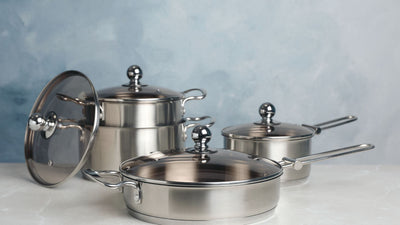
Non-stick cookware coated with PFAS may degrade over time, particularly at high temperatures. Replacing these pieces gradually with inert materials is one of the most impactful kitchen upgrades. We personally prioritize fully clad stainless steel and avoid all nonstick coatings when cooking.
What We Recommend:
Stainless steel remains a foundational choice. Look for 304 or 316 grade steel for durability and food safety.
Cast iron, whether traditional or enameled, becomes naturally non-stick with proper seasoning and may contribute trace iron.
High-quality ceramic or glass bakeware performs well for oven use when verified lead-free.
We use a high quality mix of all of the above typically depending on what we are cooking.
Care may matter as much as material: preheat gently and clean according to care instructions.
Best Option: Heritage Steel 12" Fry Pan With Lid Titanium Series
Trusted Option: All-Clad D3 Stainless Steel 12" Frying Pan With Lid
Easy Option (Amazon): GreenPan Stainless Steel 10" & 12" Frying Pan Skillet Set
⸻
2. Utensils & Cutting Boards: Just Say No To Microplastics & Glue
Plastic utensils and cutting boards may shed micro-particles into food during use. Natural materials age more gracefully and often last longer. Solid slab maple or walnut cutting boards without glued seams offer durability and stability. Proper oiling preserves both longevity and appearance. Bamboo or olive-wood utensils sealed with food-grade oil are lightweight and naturally antimicrobial. Avoid products marketed as “antibacterial,” which may rely on chemical coatings. We also love our stainless steel cooking implements as much or more than some of the wooden ones.
We particularly avoid plastic cutting boards and seek out solid wood without glue.
Best Option: Solid Maple Wood Cutting Board No Glue
Easy Option (Amazon): Pure Titanium Cutting Board Set of 3
⸻
3. Storage: Stop Storing Your Food In Plastic
Even BPA-free plastics can leach other compounds under heat or prolonged storage. Borosilicate glass containers with glass lids support safe reheating and refrigerator storage. Classic, traditionally-shaped, jars serve both practical and aesthetic roles in a low-toxin kitchen. For travel or packed meals, stainless steel containers offer durability without plastic exposure. Label contents with wax pencils or removable glass-safe markers like water-based paint pens rather than permanent synthetic inks.
Some of our favorite brands and products are glass-based. We have been prioritizing glass food storage for over a decade and we think you will love it as much as we do.
Best Option: Le Parfait Super Terrine 1L French Glass Canning Jar (beautiful, non-toxic pantry and storage solution - we reorganized our pantry with these and couldn't be happier, they are so timeless and beautiful)
Easy Option (Amazon): Urban Green Glass Food Storage Containers With Glass Lids (for leftovers and meal prep)
⸻
4. Water Filtration: Pure Reverse Osmosis With All The Right Minerals
Municipal water may contain chlorine, fluoride, microplastics, hard water minerals, and trace contaminants depending on the region. Under-sink reverse osmosis systems significantly reduce contaminant load. For renters, gravity filters or activated carbon carafes provide accessible improvement. When using reverse osmosis, it's important to opt for remineralization to maintain electrolyte balance. Water quality affects digestion, detoxification pathways, and overall cellular function. Not to mention taste for drinking, cooking, and skin and hair benefits.
We have been so happy since installing our RO system under the sink. We use it for everything from drinking to cooking water, to watering our vegetable garden. We chose one that is very fast and remineralizes (see above.) It was beyond worth it, even our veggies stay fresh far longer when placed in this water versus our old municipal tap water.
Best Option: Waterdrop X Series Reverse Osmosis System X12 (for serious, long-term water purification - this is the one we personally chose and we LOVE it)
Easy Option (Amazon): Waterdrop Large Glass Water Filter Pitcher (simple, affordable daily use)
⸻
If you're only going to change one thing, start with cookware.
Trusted Option: All-Clad D3 Stainless Steel 12" Frying Pan With Lid
Easy Option (Amazon): GreenPan Stainless Steel 10" & 12" Frying Pan Skillet Set

Optional Additional Upgrades
5. Cleaning: Fragrance Is Often Hiding EDCs
Many conventional cleaners release synthetic fragrance compounds that linger beyond visible cleanliness. Cotton or cellulose cloths reduce disposable waste. Oxygen bleach (sodium percarbonate) provides effective whitening power without chlorine. For daily surfaces, diluted white vinegar in a glass spray bottle offers a simple and effective solution that we have used seamlessly for years. Those who prefer scent sometimes add minimal amounts of organic essential oils to their homemade glass bottle cleaners.
Best Option: Branch Basics Premium Starter Kit in Glass
Easy Option (Amazon): Blueland Clean Suite Starter Kit
⸻
6. Ventilation: Protect Those Lungs...Seriously
If you cook frequently or don't have strong ventilation this is one of the easiest upgrades to improve air quality.
Cooking, particularly on gas ranges, may release nitrogen dioxide and particulate matter. Running a vented range hood during stovetop use significantly reduces exposure, especially if it vents to the outdoors. Opening windows briefly after cooking or using an air purifier can support indoor air turnover. And induction cooktops can offer efficient heating without combustion-related pollutants.
Best Option: Coway Airmega AP-1512HH(W) True HEPA Purifier (higher performance, what we chose two of)
Easy Option (Amazon): LEVOIT Air Purifier For Home Allergens (budget-friendly, still solid)
⸻
The Purely Nurtured Standard
Every kitchen essential included within the Purely Nurtured system reflects:
- Inert, food-safe materials
- Low-toxin manufacturing practices
- Long-term durability
- Minimal off-gassing
- Functional classic aesthetic design without unnecessary coatings
The selections we choose prioritize longevity and biological compatibility over aesthetics, yet many of our choices are classically beautiful since beauty can greatly effect our mood. And a beautiful kitchen that makes healthful food shapes more than meals. It shapes the atmosphere of the home. Choosing safer materials is a decision to reduce unnecessary exposures while elevating daily rituals. Cooking shifts with the seasons, yet the intention remains constant: nourishment prepared in an environment that supports rather than burdens the body. A well-designed kitchen becomes both a sanctuary and a studio, a space that invites connection, creativity, and calm.
⸻
Where To Start
• If you want the biggest impact → cookware
Best Option: Heritage Steel 12" Fry Pan With Lid Titanium Series
Trusted Option: All-Clad D3 Stainless Steel 12" Frying Pan With Lid
Easy Option (Amazon): GreenPan Stainless Steel 10" & 12" Frying Pan Skillet Set
• If you want the easiest swap → storage
Best Option: Le Parfait Super Terrine 1L French Glass Canning Jar (beautiful, non-toxic pantry and storage solution - we reorganized our pantry with these and couldn't be happier, they are so timeless and beautiful)
Easy Option (Amazon): Urban Green Glass Food Storage Containers With Glass Lids (for leftovers and meal prep)
• If you want long-term upgrade → water
Best Option: Waterdrop X Series Reverse Osmosis System X12 (for serious, long-term water purification - this is the one we personally chose and we LOVE it)
Easy Option (Amazon): Waterdrop Large Glass Water Filter Pitcher (simple, affordable daily use)
⸻
Purely Social
Follow Purely Nurtured for curated wellness, clean living inspiration, and seasonal edits.
Instagram → @purelynurturedofficial
Pinterest → purelynurturedofficial
TikTok → @purelynurtured
⸻